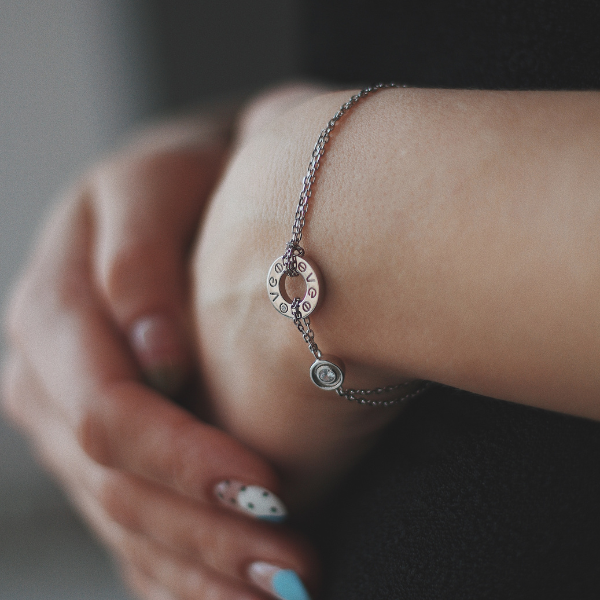


How to Care for Sterling Silver Jewelry
Sterling silver jewelry can develop tarnish over time, especially when exposed to moisture, air, cosmetics, and household chemicals. Tarnish is a natural surface reaction and does not automatically mean a piece is defective. A few simple habits can help keep silver jewelry looking its best.

Keep jewelry dry when possible
Remove sterling silver jewelry before swimming, showering, exercising, or using a hot tub. Chlorine, salt water, sweat, and prolonged moisture can affect the finish and may also be hard on plated surfaces, adhesives, enamel, and certain stones.
Apply personal-care products first
Put on lotion, perfume, hairspray, sunscreen, and makeup before adding your jewelry. Allow products to dry before wearing a piece so less residue transfers onto the metal and stones.
Wipe pieces after wearing
Use a clean, soft, dry cloth to gently remove oils and moisture after wear. For plain sterling silver, a silver-polishing cloth can help remove light tarnish. Do not scrub aggressively, especially on plated, oxidized, enamel, or stone-set pieces.
Store pieces separately
Keep jewelry in a dry pouch, lined box, or sealed bag when it is not being worn. Storing pieces separately reduces scratching, tangling, and contact with materials that may speed up tarnishing.
Avoid harsh cleaning methods
Bleach, chlorine cleaners, abrasive toothpaste, rough brushes, and strong chemical dips can damage finishes or stones. Home cleaning methods that are appropriate for plain silver may not be suitable for plated, glued, enamel, opal-style, or crystal-accented jewelry.
Check the individual product details
Aura Rene products can include sterling silver, plated finishes, crystals, enamel, glass, synthetic stones, and other materials. Care requirements can therefore vary. Review the product specifications and any included supplier instructions before cleaning a specific piece.
When professional help makes sense
Consider a professional jeweler for heavy tarnish, loose stones, damaged clasps, bent settings, or pieces with unknown materials. Professional inspection is safer than experimenting with strong cleaners on a delicate item.
This guide provides general care information and is not a guarantee against normal wear, tarnish, plating changes, or accidental damage.


